Stock, margins, cash flow and the operational lessons that shape brand growth.
The storefront is the visible part of a brand; this desk is about the work behind it. Stock, margins, cash, lifecycle email, the rules that decide which products get promoted and which get retired, and the order in which to fix them when several things are broken at once.
The evidence comes from running VIBAe as well as advising clients, so the articles favour the repair queue over the wishlist: which lifecycle flow to fix first, how to judge a SKU on contribution rather than conversion rate, and what a deteriorating email programme looks like before the open rate tells you.
CIPS describes supplier preferencing, from Steele and Court, as the supplier's view of the account. Value is your share of their sales. Attractiveness covers standing, growth, payment behaviour and how much attention the account needs. A D2C buyer can score both, then choose a supplier or change how the account is run.
On a horizon you name, rank supplier lead time, landed cost, cover, fulfilment and returns by the cash or contribution you can still change. Then work the stage with the largest amount you can still move, not the stage that looks wrong first.
Group a supplier list by what the payments buy, then put a written strategy on the large categories and on any smaller one whose failure would stop orders. The formal method assumes a procurement team. A founder can still use the grouping.
On Shopify, audit adjustment history before you buy against a low inventory quantity. That view covers 180 days for one tracked variant at a time. On the Shopify POS app, a refund does not add units back unless restock is switched on.
Use a stock transfer order when stock you already hold moves from a warehouse, a 3PL, a pop-up or a store to another of those places. Post the goods issue and the goods receipt separately when you need a quantity you can monitor between those locations. SAP calls its purchase-order version a stock transport order.
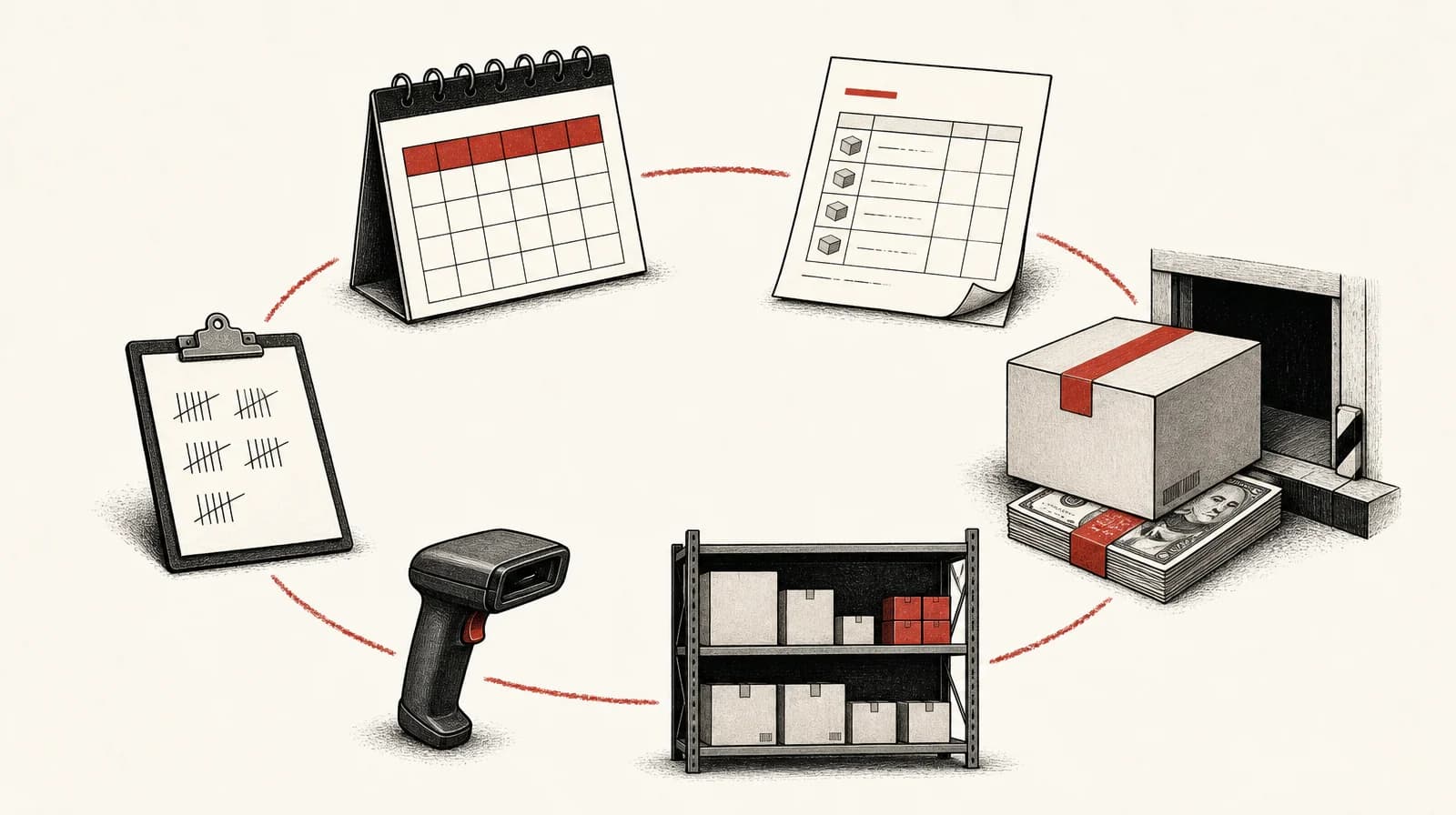
A D2C brand that buys finished goods can run forecast, purchase, receive, store and fulfil, track, then count. The owner split and the weekly and monthly cadence are a small-team recommendation. Invented figures show how Shopify's On hand total changes a reorder.
A shop and a marketplace can both promise the last unit. Set a shippable count, hold units back for the gap between updates, and cap or ring-fence a thin seller-fulfilled channel. These are operating rules for any tool you use to sync. They do not describe Shopify's inventory updates. The Amazon.com and eBay.com consequences below come from US pages.