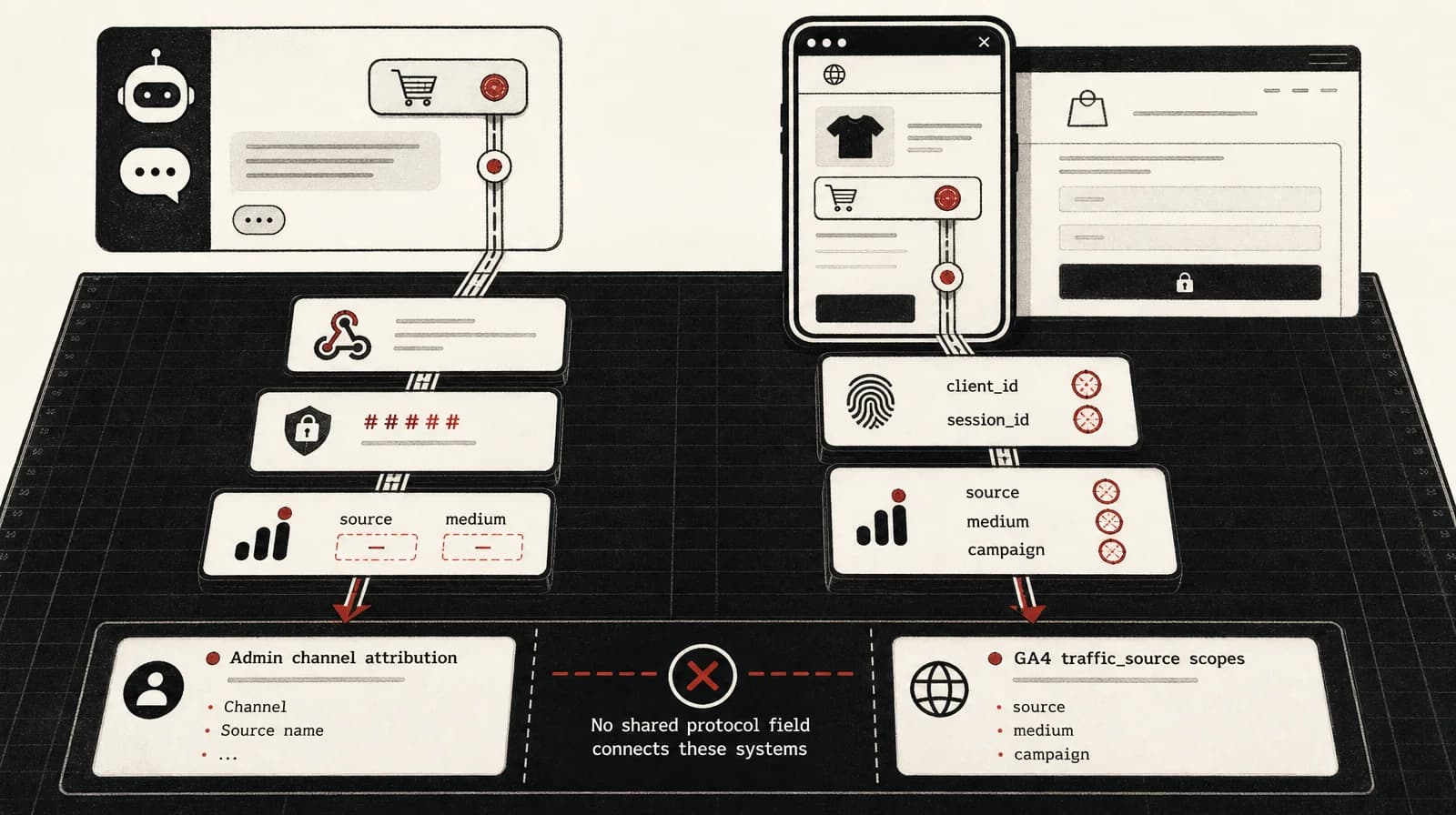
A code, a link and a partnership ad record different events. The buying check is whether a platform can name the Shopify order, show which evidence won, and match that credit to the payout.
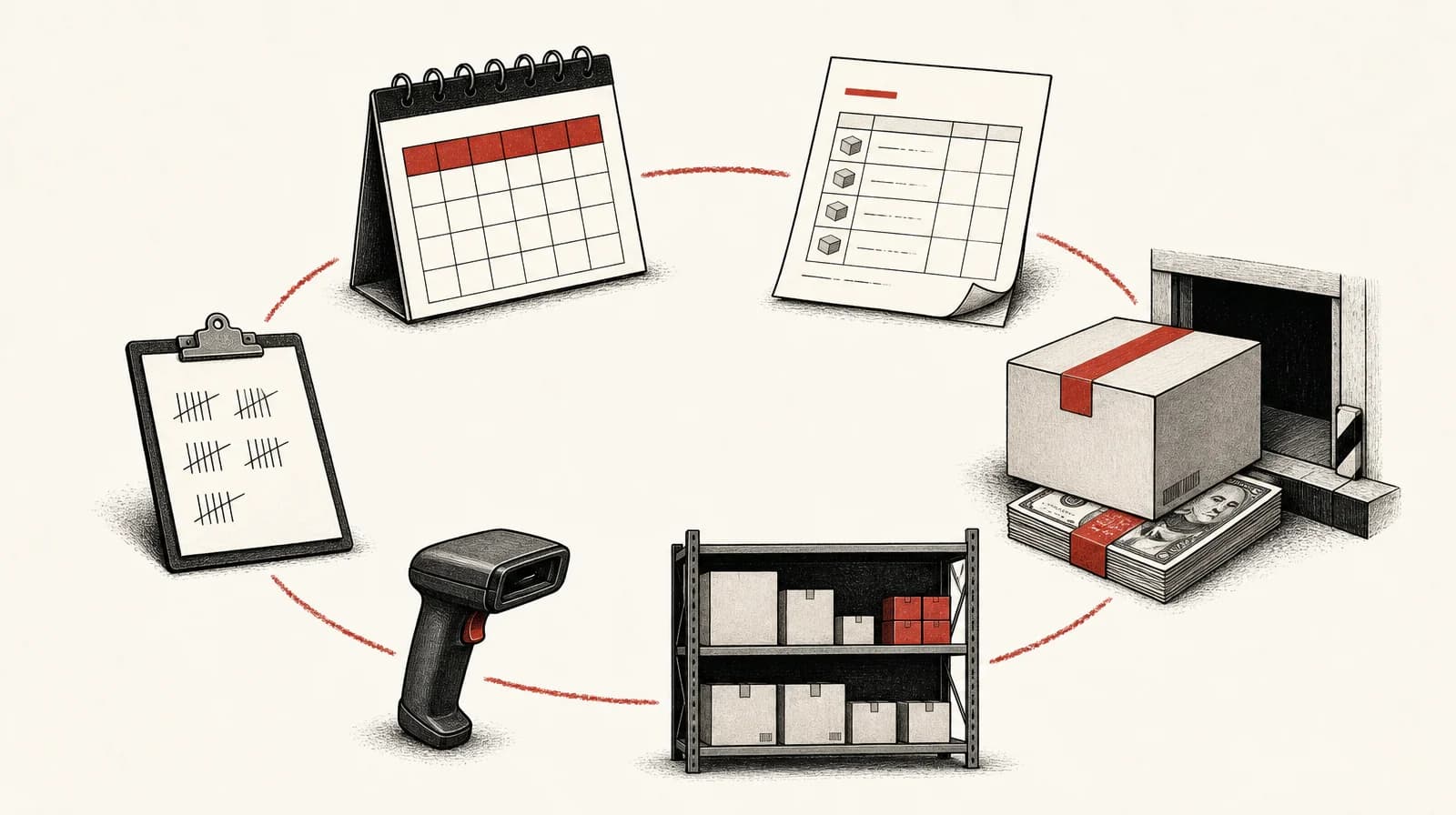
A D2C brand that buys finished goods can run forecast, purchase, receive, store and fulfil, track, then count. The owner split and the weekly and monthly cadence are a small-team recommendation. Invented figures show how Shopify's On hand total changes a reorder.
An assistant can flag blank, zero, cost-at-or-above-price and partial-variant gaps in a Cost per item export, excluding gift cards. It cannot confirm true cost. Shopify reports profit only for products and variants that had a cost recorded at the time of sale. Match a sample to invoices before you treat a margin figure as complete.
A store needs more than a definition of AI agents. Use the workflow test and a job-based taxonomy to assess support, catalogue and fulfilment tools, then separate those tools from agents shopping on a customer's behalf.
There is no single agentic checkout to tag. In-chat completion has no merchant page for gtag to fire. A Shopify ChatGPT path still hits your store checkout in an in-app browser. The GA4 job follows that split, and any source you write is a merchant convention.
Open rate and a Postmaster reputation badge no longer tell you whether a Shopify Klaviyo account is leaking. Read the signals that survived privacy changes, then fix integration, cart timing, segmentation and hygiene in that evidence order.
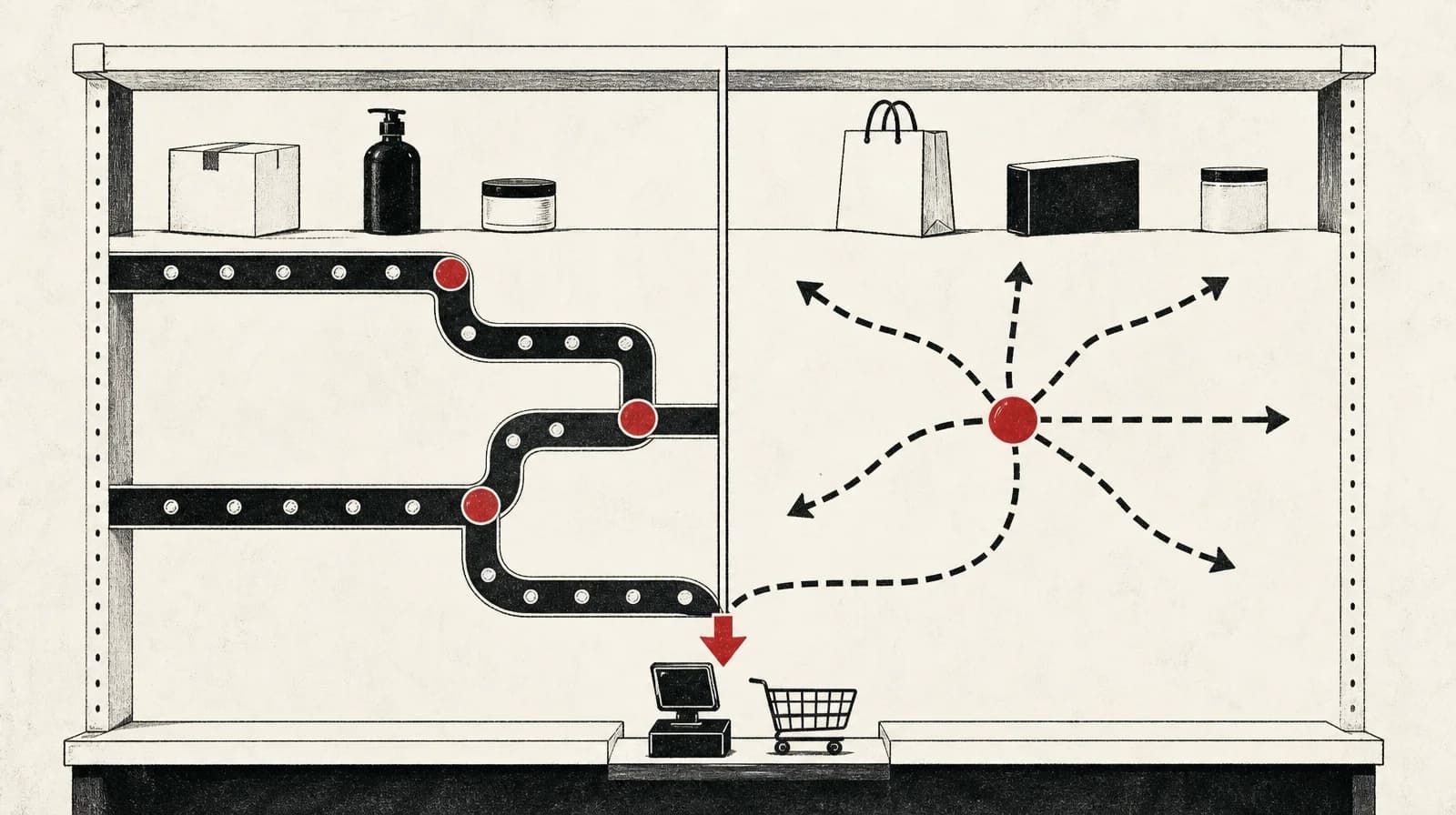
Once an AI recommendation layer is live, relevance-guessing rules can go. Constraints that protect cash should stay. Promote and kill SKUs on CM2, built as a reporting view from Shopify costs, not on conversion rate.