Key takeaways
Brief an advertising creative as concept, hook, message, proof and format, and mark it as a new concept or a variation before production.
Judge the file on your margin after you separate repeated exposure, lookalike files and auction cost.
An advertising creative, for the person buying the media, is a decision you can brief, run and stop. Amazon Ads describes creative advertising as advertising that tells a unique story or point of view about a brand's products or services, and lists brand marketing, product marketing, custom advertising solutions and experiential marketing as the main types. A buyer can use that description and still not know which decision the next file is supposed to test.
Concept, hook, message, proof and format
Use these five names in every brief.
The concept is the idea someone could repeat after one viewing. The hook is the opening the viewer meets first, a line or an image. The message is the claim. The proof is the object that makes the claim believable. The format is the file: length, ratio and the placements it has to survive. A brief that only asks for a new video names the format and leaves the concept unstated.
This split is for commissioning a file, so it stays separate from Amazon's list of marketing types. The five names are not a score in Meta Ads Manager, and the same brief applies whether the budget sits on Meta or on Google Ads. The Delivery labels later in this piece are reports about Meta Ads Manager only.
A colour change is usually a variation
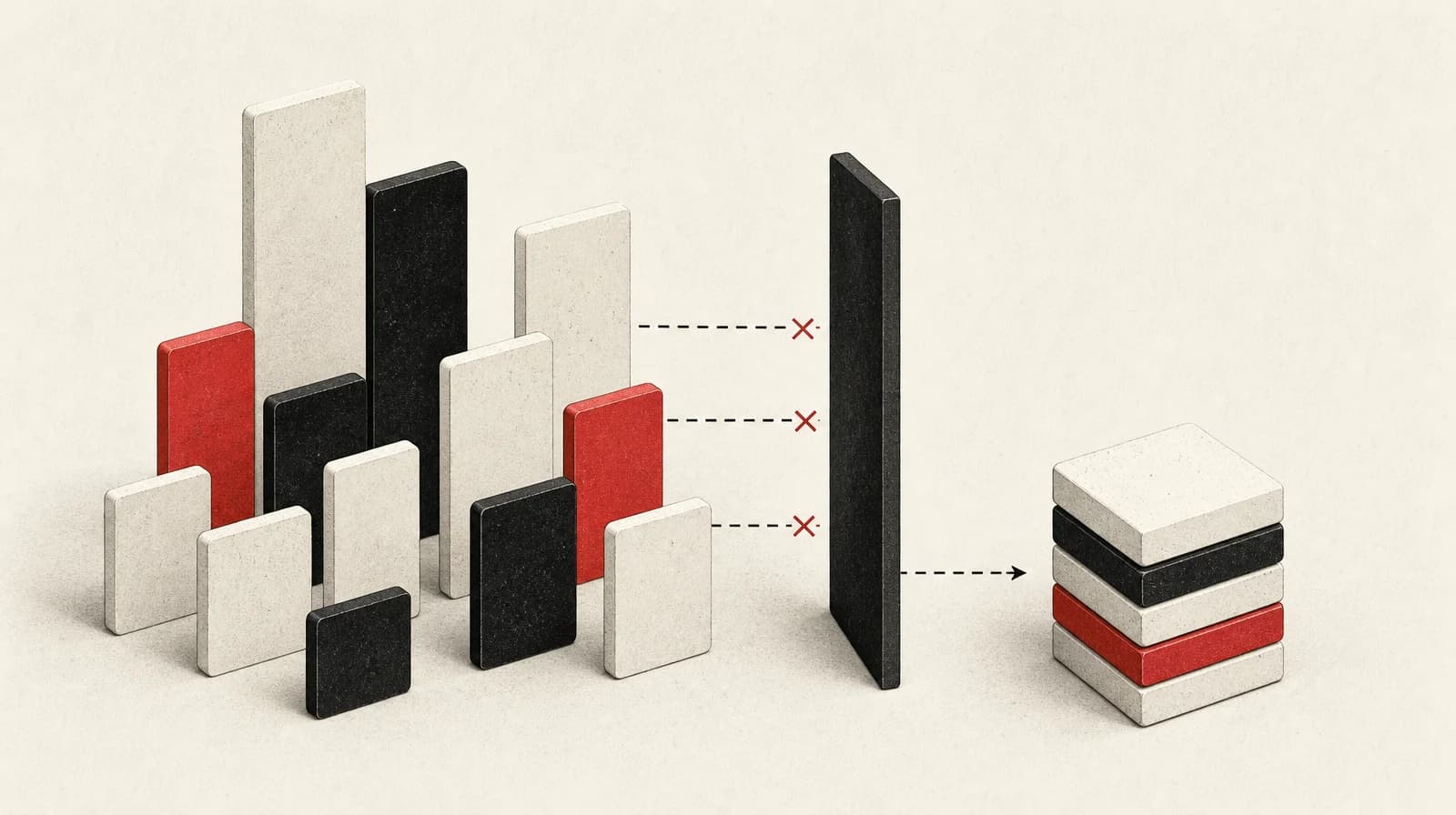
Marpany reports a Meta post from December 2025 that separates creative fatigue from creative similarity. In that report, fatigue is people seeing the same ad too many times, and similarity is different ads that look so alike that people perceive them as repetitive. Marpany describes similar ads as looking so alike that they are perceived, and evaluated, as one idea. Use that distinction when you label the next file as a new concept or a variation.
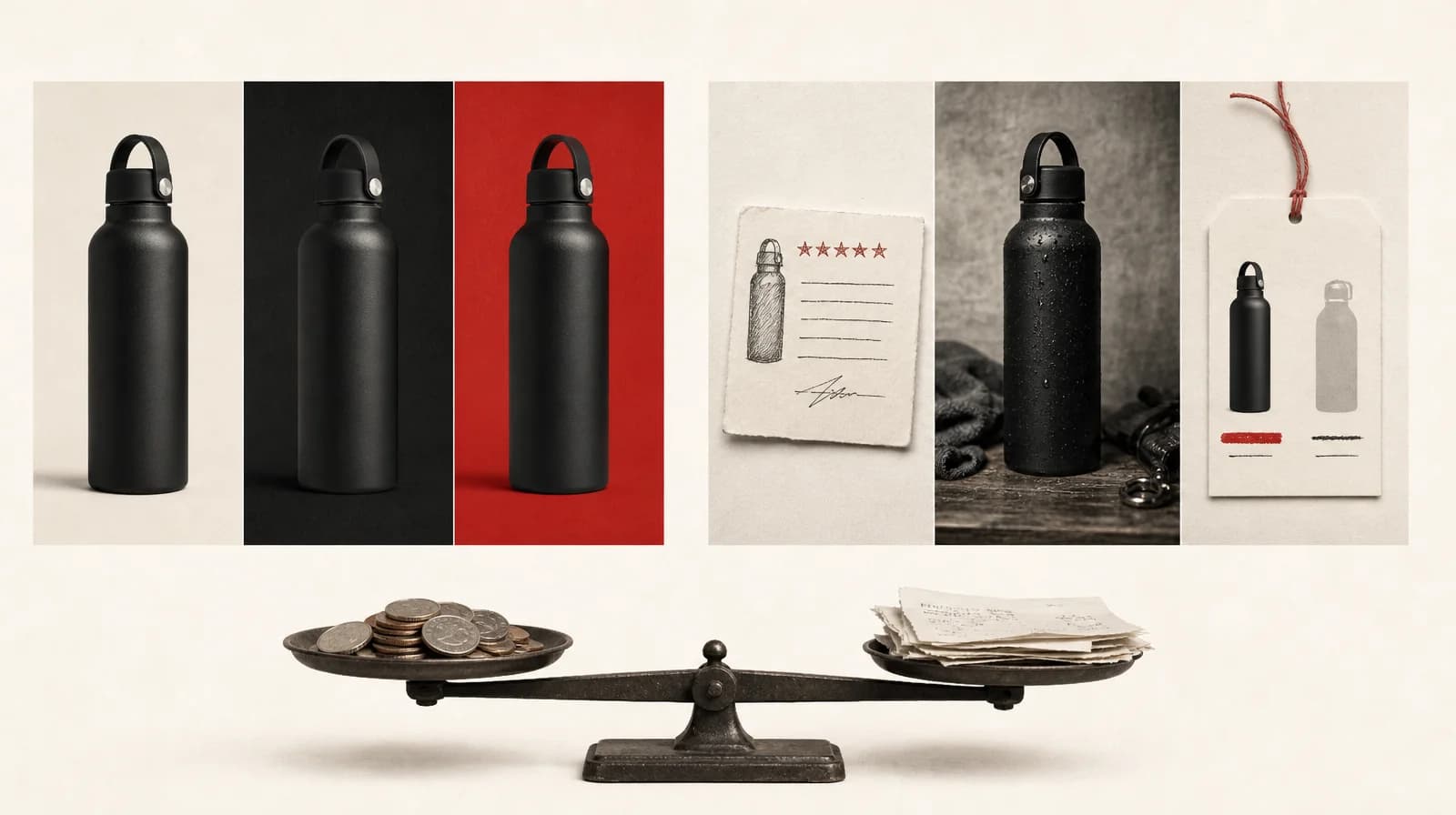
A change is a variation when a person would still read it as the same idea. DesignerBox gives the plain case, and it is that vendor's judgement, not Meta's: a new colour on the same layout is similar. Three photos of one product, same crop, with only the backdrop colour changed, are one concept. The same product with a handwritten review card, a worn-in use scene, and a price tag beside a competitor silhouette can be three concepts, because each proof asks for a different belief.
The awkward cases sit on the border. A backdrop that shows the product worn out in a real kitchen is a proof change, even if the shot list only records a colour change. Label the belief the viewer is being asked to hold, not the edit the team made.
AdsUploader cites a study it calls "Creative Fatigue", from the Analytics at Meta team, and dates that study to November 2023. It reads the study as tying decay to repeated exposure rather than to days on a calendar, and says a fixed refresh calendar is not strongly supported. That reading is not a monthly quota. How many new files to make is a separate decision, covered in How many new Meta creatives do you actually need each month?.
Lock the brief before production
Write these lines before anyone produces the file. If one is blank, the job is not ready.
- Objective. One commercial result you can compare with margin. A traffic goal and a cost goal that pull the edit in opposite directions are two briefs.
- Concept. One sentence a colleague could repeat.
- Hook. The opening line or image.
- Message. The claim.
- Proof. The named asset, not a category.
- Format. Length, ratio and the placements the file must work in.
- Label. New concept or variation.
- Kill rule. The cost, from margin before ad spend, at which you stop. The arithmetic is in the last section. Agree the number before the first results land.
Sort the cause before you blame the file
A higher cost has more than one explanation. Sort it before you commission another file.
Marpany and Coact each cite Meta's Help Center for the Delivery labels. Marpany limits those labels to eligible ad sets: Creative limited when cost per result is above your past ads but less than double, and Creative fatigue when it is double or more. Coact describes the same two thresholds. Adsights says both statuses are defined against your own ad account history for the same optimisation event, and that the cited description gives Creative limited no published lower bound, so a modest increase can trigger the label. Because Marpany limits the labels to eligible ad sets, a missing label is not evidence the file is fine. Your profit test is still the margin figure.
DesignerBox says Meta's ad relevance diagnostics need at least 500 impressions, and that they are not inputs into the auction. Wait for that volume before you read them. Do not treat them as the price the auction charged.
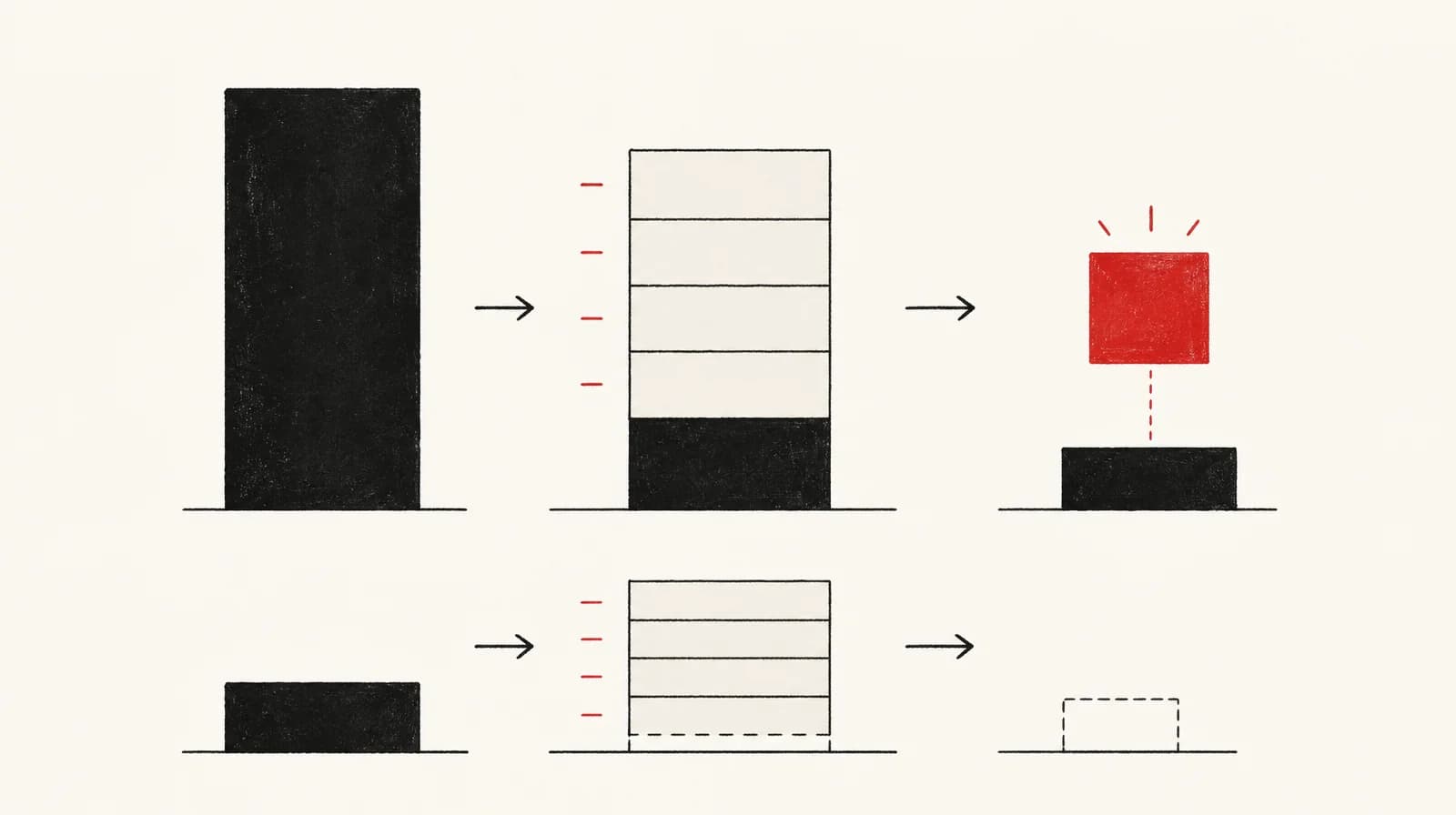
Repeated exposure is the fatigue case. The same ad has been seen often enough that results worsen. AdsUploader's check is whether a new creative in the same audience restores performance. If it does, the check points to creative fatigue.
Files that look alike are the similarity case. The new upload is close enough to an older one that a person reads them as one idea. A colour swap on a fixed layout is the DesignerBox example. Another variation does not answer that. You need a different concept, which usually means a different proof or a different belief. How to use the Meta Ad Library for creative tests is where to collect reference ads that are actually different from the layout you already run.
Auction cost is the case where the market moved. RoopTantra uses this comparison: if brand-new ads cost as much as old ones, the auction moved. Adsights says to rule out seasonal demand, audience edits and placement mix shifts before you call a CPM rise fatigue. Its seasonal example is Q4, when it says CPMs rise across an ad account. A new concept will not fix an ad account whose costs rose with the auction, including that Q4 pattern.
Set the kill number from margin
The figures here are invented. They are not a benchmark. The example uses pounds so the arithmetic is easy to follow. Use your own currency.
Take a £60 average order value and a 40% contribution margin before ad spend. The order leaves £24 before any media cost. In this example that £24 is what remains after product cost, fulfilment and payment fees. Break-even return on ad spend equals 1 divided by the margin before ad spend: 1 / 0.40 = 2.5. The same order breaks even at a £24 cost per purchase. At 2.5, ad spend uses the whole £24, and profit on the order is zero.
Build the margin before ad spend. If you have already taken ads out, this formula counts them twice. At 2.5, profit on the order is zero, so treat that figure as the break-even line for reported return, and keep incremental profit as a separate question. How attribution should change a buying decision is in Conversion metrics that actually matter for paid acquisition decisions. If a file clears your number and you are deciding whether it can take more budget, use What to check before increasing Meta ad spend.
Write your equivalent of £24 into the kill rule before launch. A handful of early results is not enough to stop a file. Look at cost without waiting for a relevance diagnostic: DesignerBox's 500 impressions apply to those diagnostics, not to this rule. The sources cited here do not settle how much delivery is enough to read. Once cost per result is stable enough to compare with your margin figure, and it stays above that figure, stop the file or replace the concept.
Sources
- Meta Andromeda: Creative Strategy & How Many Ads to Run marpany.com Relays a Meta December 2025 creative-diversification post, not checked here against the original: fatigue is people seeing the same ad too many times; similarity is different ads looking so alike that people perceive them as repetitive.
- Meta Ad Fatigue: Why Ads Burn Out and How to Fix It coact.biz Repeats the same Creative limited and Creative fatigue cost-per-result thresholds, citing Meta's Help Center. Not independent confirmation of S1; both trace to the same page.
- Ad Fatigue: How to Spot It and Refresh Your Winning Ads designerbox.ai Cites Meta Business Help Center, About creative fatigue recommendations in Meta Ads Manager, facebook.com/business/help/1346816142327858, accessed September 2026. That primary page was not retrieved for this article.
- Creative Fatigue in Meta Ads: Detection Thresholds & Fix Playbook (2026) adsights.ai Adsights says the Creative limited and Creative fatigue delivery statuses are both defined against the advertiser's own account history for the same optimization event, not against past ads in general.
- Meta Ads Creative Fatigue: How Fashion Brands Fix It rooptantra.ai Separates creative similarity, auction inflation (everyone paying more for the same buyers) and fatigue. Its line that Meta treats lookalike ads as one is this page's framing, not used here as verified platform behaviour.
- Facebook Ad Fatigue: What It Is, How to Spot It, and How to Fix It adsuploader.com AdsUploader does name the research it relies on: a study called "Creative Fatigue" from the Analytics at Meta team, which it dates to November 2023. The claim that it 'does not identify' or 'does not name' the research is wrong in both the body and the FAQ.
- What is Creative Advertising? Ideas and Examples advertising.amazon.com Defines creative advertising as a type of advertising that tells a unique story or point of view about a brand's products or services.