Key takeaways
Use ROAS to manage media delivery and contribution profit to judge the business result.
Read market-level movement alongside isolated campaigns, without turning correlation into causation.
ROAS is not the business.
Paid media should not choose between ROAS and profit as if they were rival versions of the same number. They answer different questions.
ROAS tells a buyer how much attributed conversion value came back for the advertising cost recorded by a platform or reporting view. It can help steer bids, compare delivery and spot a campaign that has moved away from its target. Profit asks whether the orders were commercially worthwhile after the business accounts for the costs attached to them.
That split matters because an ad platform cannot protect a margin it has never been given. If every purchase is reported as revenue, a bidding system will find revenue. It will not quietly deduct product cost, a discount, outbound shipping, payment fees and expected returns on the operator's behalf.
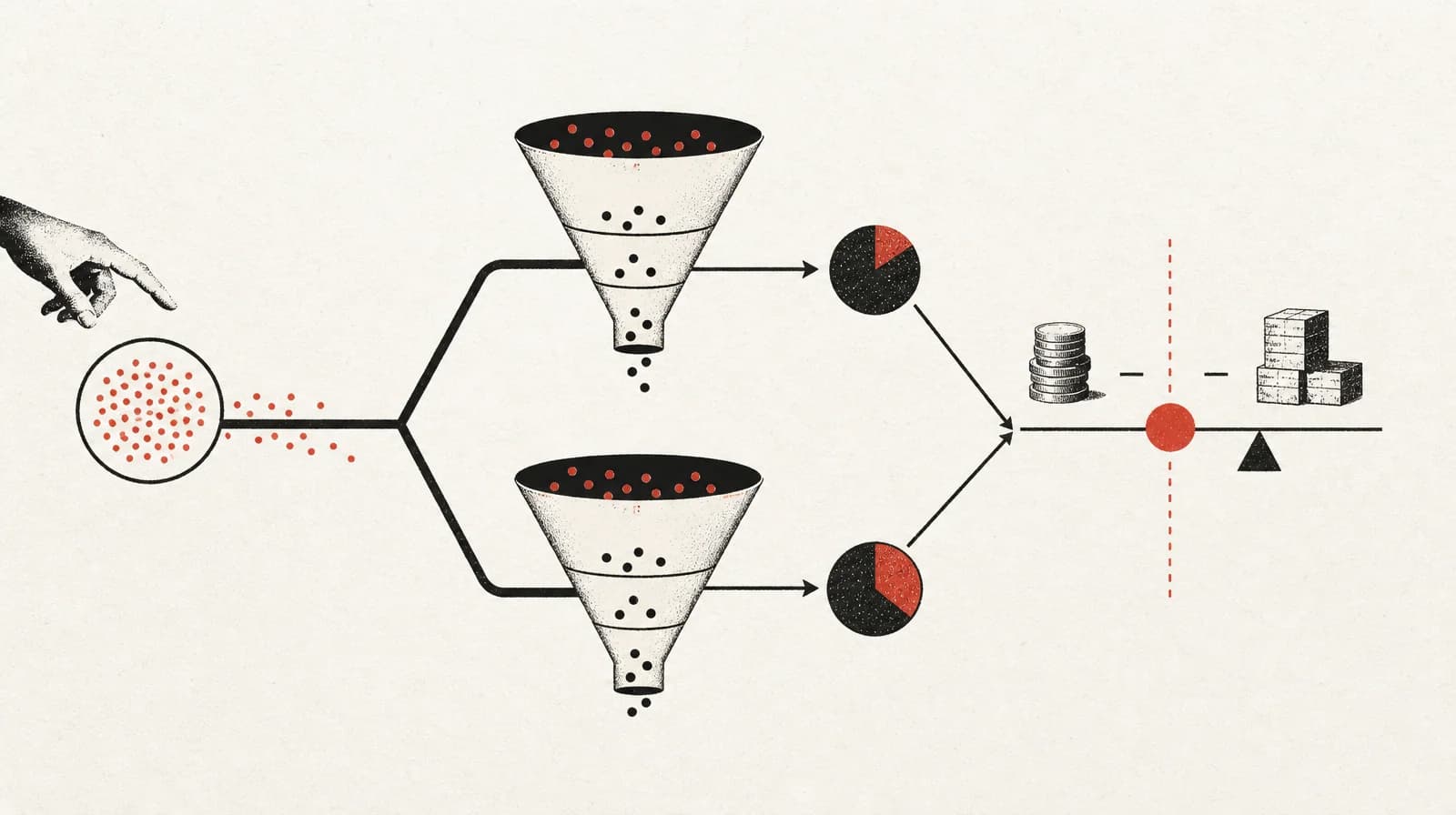
The useful operating model is straightforward: let the platform optimise against the best conversion value you can supply, but let the business decide budgets through a consistent profit view.
What does ROAS actually control?
ROAS is conversion value divided by advertising cost. The definition sounds settled until two reports show different answers.
Platform ROAS uses the conversions and attribution rules inside an advertising account. A finance or commerce report may use order date, net sales and a different treatment of cancellations. A blended ratio may divide all store revenue by all marketing spend without assigning a sale to one channel. Each view can be internally valid while describing a different slice of the business.
Google's explanation of Target ROAS is precise about the job its bidding strategy performs. Google predicts conversion value for an auction, adjusts bids and tries to reach an average conversion-value-to-cost target. The strategy works with the conversion values supplied through tracking.
That makes ROAS a control signal. It is useful for questions such as:
- Is a campaign delivering close to the value target set for it?
- Did a change produce more conversion value for the same media cost?
- Is the target so restrictive that the campaign cannot find enough volume?
- Which part of the account needs a closer diagnostic review?
ROAS does not settle whether the company should spend more. That decision also belongs to stock, cash, margin, customer mix and the opportunity cost of putting money into another channel or another part of the business.
Why can good ROAS still produce weak profit?
A revenue ratio treats every pound of reported revenue as if it contributes equally. Ecommerce orders rarely behave that neatly.
One product may carry a much stronger gross margin than another. A promotion can lift conversion rate while giving away part of the margin. An international order may bring more revenue and more fulfilment cost. A category with frequent returns may look healthy at order time and much less attractive after the return window closes. Existing customers can convert efficiently while new-customer acquisition weakens underneath the account total.
Shopify's profit report documentation makes two details easy to miss. Profit reporting depends on complete product-cost data, and discounts and refunds change the margin shown in the report. A ROAS view that receives gross order value does not automatically inherit either adjustment.
This is how teams end up arguing past one another. The buyer can truthfully say the account held its ROAS target. Finance can truthfully say contribution fell. The disagreement is not solved by choosing the more senior dashboard. It is solved by tracing both numbers back to their definitions.
The reconciliation should identify at least four things:
- Which revenue field entered the ROAS calculation.
- Which orders the attribution window included.
- Which variable costs changed with those orders.
- Whether the customer and product mix changed during the period.
That turns a vague argument about accuracy into a decision about definitions and timing.
What did the VIBAe localisation test show?
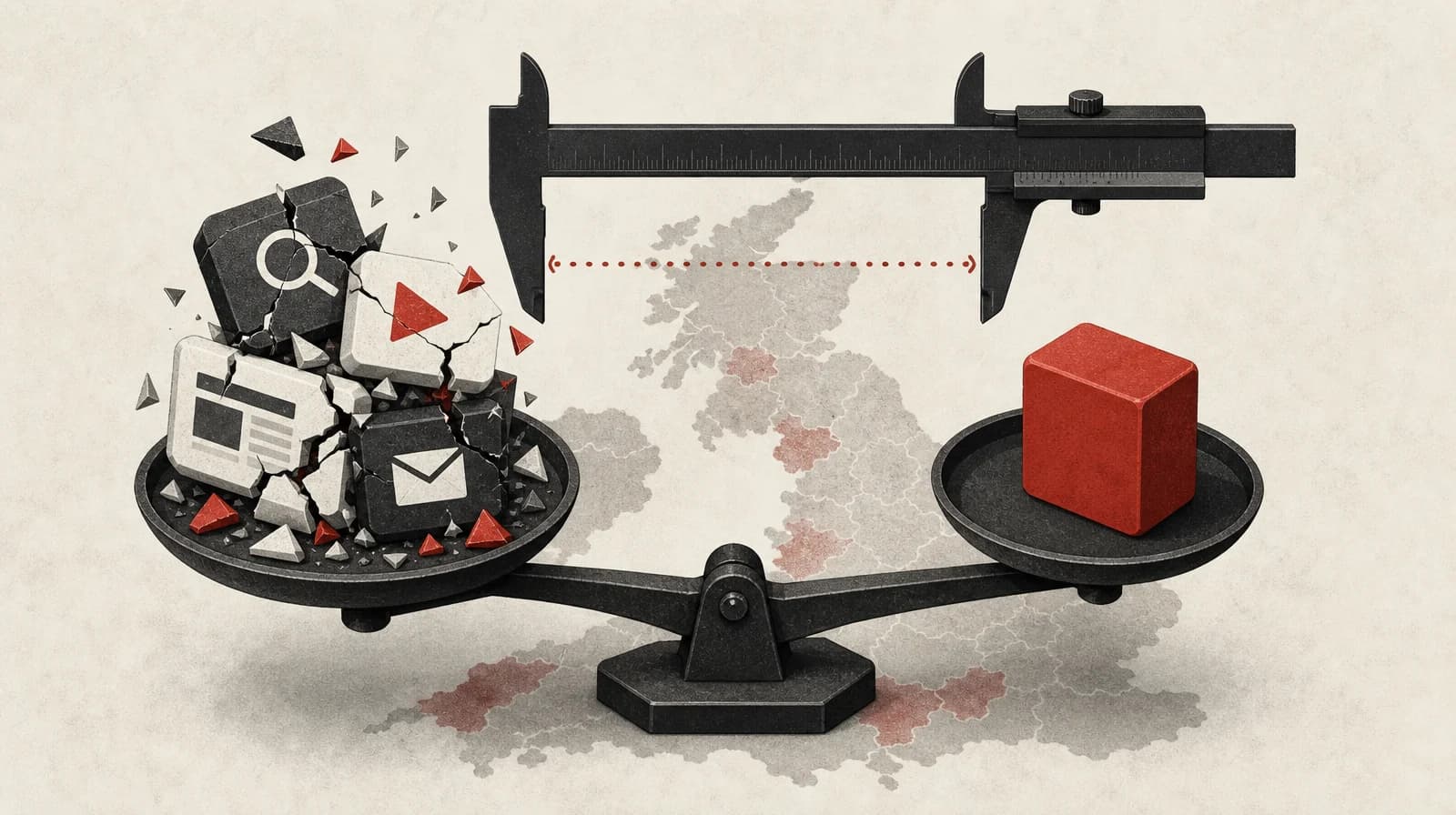
At VIBAe, we ran native-language ads in Germany, France, Spain and Sweden. Read in isolation, those campaigns looked like they should be stopped. Their ROAS was weak.
The English campaigns in the same countries moved the other way. That did not prove the localised ads caused the improvement. Other changes in demand, delivery or account mix could have produced it. The movement did show that an immediate shutdown based only on the isolated campaign result would have been the wrong call.
The operating conclusion was narrower: weak local result, positive total effect, keep learning. We watched the whole market as well as the campaign and kept the causal claim open until the evidence could support it.
The distinction matters. An unattributed market effect is not permission to rescue every weak campaign with a story about halo. It is a reason to define the test at the level where the business expects the effect to appear, then judge the isolated and total results together.
ROAS is not the business.Eddie Cheng, Co-owner, VIBAe
The other split is less subtle and more common. Platform ROAS can be green while the business is losing money. Product cost, discounts, returns, fulfilment and customer mix can all turn apparently efficient revenue into weak contribution. In that case, there is no halo question to resolve. The business result governs the spend decision.
Should you send profit values back to the platform?
Sometimes. The better question is whether the profit signal is reliable enough to become an optimisation input.
Google Ads allows conversion values to represent sales revenue or profit margins. It also supports transaction-specific values, which are more representative when purchases vary in value. That opens a useful path for businesses with dependable order-level cost data.
A profit-weighted value can help the platform distinguish between two orders that produce similar revenue but very different commercial outcomes. It can also stop the account from treating a heavily discounted, low-margin order as equal to a full-margin order of the same reported value.
The approach becomes risky when the input is incomplete or unstable. A value that ignores returns, applies stale product cost or changes definition halfway through a test teaches the platform against a moving target. Delayed profit data can also be too slow for the bidding decision it is meant to improve.
Before replacing revenue values, check:
- Coverage: does every important product and market have a usable cost value?
- Timing: when do discounts, cancellations and returns become known?
- Stability: can the same calculation run every day without manual repair?
- Volume: will the account still receive enough correctly valued conversions?
- Auditability: can a buyer trace the value sent for a real order?
If those conditions are not met, keep the bidding value simpler and use profit as a separate business gate. A clean revenue signal paired with a disciplined profit review is safer than a sophisticated profit signal nobody trusts.
Which profit definition belongs in the review?
There is no single contribution-profit definition used by every ecommerce business. The team needs to agree its own and write it down.
A practical order-level view often begins with net sales rather than gross sales. Net sales account for discounts and returns. From there, the business can deduct the variable costs that arise when it accepts and fulfils the order. Depending on the operation, these may include product cost, pick and pack, outbound shipping paid by the brand, payment fees, duties, a returns allowance and media spend.
Some teams include agency or creative cost in a weekly contribution view. Others keep those costs in a monthly operating statement. Either choice can work if the label is honest and the decision does not switch between definitions when the result becomes uncomfortable.
Google's own ROI guidance includes product cost when explaining advertising return. That is a useful reminder that revenue divided by ad spend is not the same thing as the money left after selling and acquiring the product.
Write the reporting contract in one short block:
- Revenue field: gross sales, net sales or another named field.
- Cost lines: the exact deductions included in contribution profit.
- Customer basis: all customers, new customers or a split view.
- Date basis: order date, shipment date or another agreed point.
- Return treatment: actual returns, an allowance or a later restatement.
- Currency and tax treatment: consistent across all markets in the view.
The contract matters more than the label. Two teams can both say "contribution profit" while deducting different costs.
How should ROAS and profit share the job?
Give each measure a named decision.
| Decision | Primary view | Supporting view | | --- | --- | --- | | Auction and bid delivery | Platform conversion value and ROAS | Event quality and conversion volume | | Campaign diagnosis | Channel ROAS, cost and conversion mix | Landing-page and creative evidence | | Weekly spend decision | Contribution profit and cash room | Blended efficiency and new-customer mix | | Product push | Product or category margin | Stock cover and conversion rate | | Monthly plan | Profit and cash-flow forecast | Channel scenarios and operating capacity |
This prevents one number from carrying five jobs. It also gives the weekly meeting a natural order.
Start with the business result. Did the period produce the expected contribution, and is there enough cash and stock to continue the plan? Then open the media views to explain where delivery helped or hurt. The account report becomes a diagnostic tool instead of a substitute profit-and-loss statement.
The same principle applies to blended media efficiency. A blended number can tell the team that the overall relationship between revenue and spend moved. It cannot explain the movement without customer, product and channel context.
What should change before the budget changes?
A budget decision should state the assumption it is testing. "ROAS looks good" is not enough because it says nothing about the headroom or the risk.
Use this sequence:
- Confirm the business target. Name the required contribution, cash constraint and period.
- Reconcile the inputs. Check that revenue, spend and order timing cover the same window.
- Split the mix. Look at new and returning customers, full-price and discounted orders, and the products receiving the extra demand.
- Check capacity. Review stock cover, site conversion, fulfilment and the creative supply needed to support more delivery.
- Define the test. State the budget change, expected trade between volume and efficiency, review date and stop condition.
The second article in this launch set, what to check before increasing Meta spend, applies that sequence to an account-level scaling decision.
One test will not prove a permanent relationship between spend and profit. It will show how the system behaved under a specific product mix, offer, creative set and market condition. Keep those conditions in the decision record.
What does a useful weekly review look like?
The review can fit on one screen if each line has a job.
Begin with net sales, contribution profit and cash or stock constraints. Add the agreed blended efficiency ratio. Split new from returning customers. Then show platform cost, conversion value and ROAS for diagnosis. If the period involved a promotion or product launch, isolate it rather than letting it distort the base business without comment.
The meeting should end with a decision, an owner and a date. It should not end with a screenshot collection.
Useful decisions include:
- Keep spend steady while a return or fulfilment issue is measured.
- Increase spend within a named stock and contribution limit.
- Move spend towards a product group with better commercial room.
- Hold the budget and repair measurement before reading the next result.
- Accept lower short-term efficiency for a defined new-customer test.
Each decision should preserve the assumptions used to make it. Otherwise the team will revisit the same argument when the next dashboard refreshes.
How should the target change with customer and product mix?
A single ROAS target assumes that the value behind each reported pound is comparable. That assumption weakens when the account sells products with different margins or shifts between new and returning customers.
The business can respond in several ways. It can send transaction-specific values that better reflect the order. It can separate campaigns or product groups where the economics differ enough to warrant another target. It can keep a simpler platform value and apply customer or product constraints in the business review. The right choice depends on data coverage and conversion volume.
Begin with the commercial boundary. Calculate the contribution available before advertising for the relevant product and customer group. Then decide how much of that contribution the acquisition plan may spend. That produces a planning limit, not a promise that every attributed order is incremental.
Average and marginal performance also need separate treatment. The account's historical average includes demand earned under earlier budgets, creative and market conditions. The next block of spend may reach customers who are harder to convert. A scaling plan should therefore state how much efficiency can fall while the additional volume remains acceptable.
Use scenarios rather than one precise forecast:
- Current efficiency and current product mix.
- Lower efficiency with the intended increase in new-customer volume.
- Lower-margin mix caused by the products or markets receiving more spend.
- A downside case with slower conversion, higher returns or a stock constraint.
If none of the downside cases can be funded, the apparent target is too close to the edge for the proposed change. Repair the economics, narrow the plan or hold the budget.
Which number wins when ROAS and profit disagree?
Profit wins the business decision because the company has to fund the result. ROAS still matters. It helps the buyer understand how the platform delivered against the value it received and where to investigate next.
The mistake is asking ROAS to certify profit without providing the costs, or asking a monthly profit report to make every auction decision. Connect the two views, keep their definitions visible and let each control the part of the system it can actually describe.
For more operator notes on this kind of decision, read Eddie's weekly letters.