Key takeaways
Reserve expected refunds on the order week, then replace that reserve with refunds matched to those orders.
Label the result a management estimate, not an IFRS or US GAAP filing.
Do not scale ad spend on an open cohort from an unreserved sales export.
Reserve the order week, then replace it
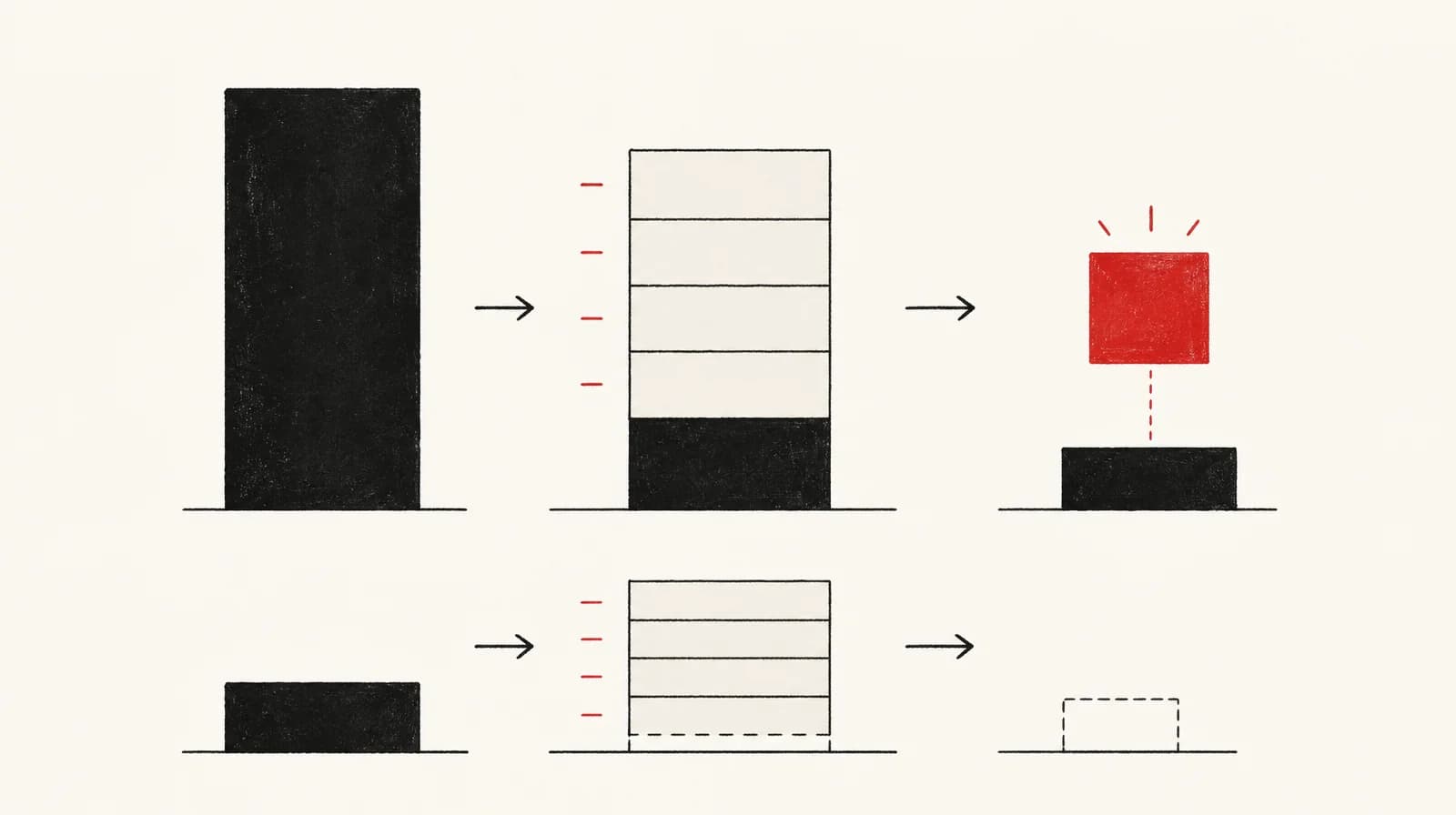
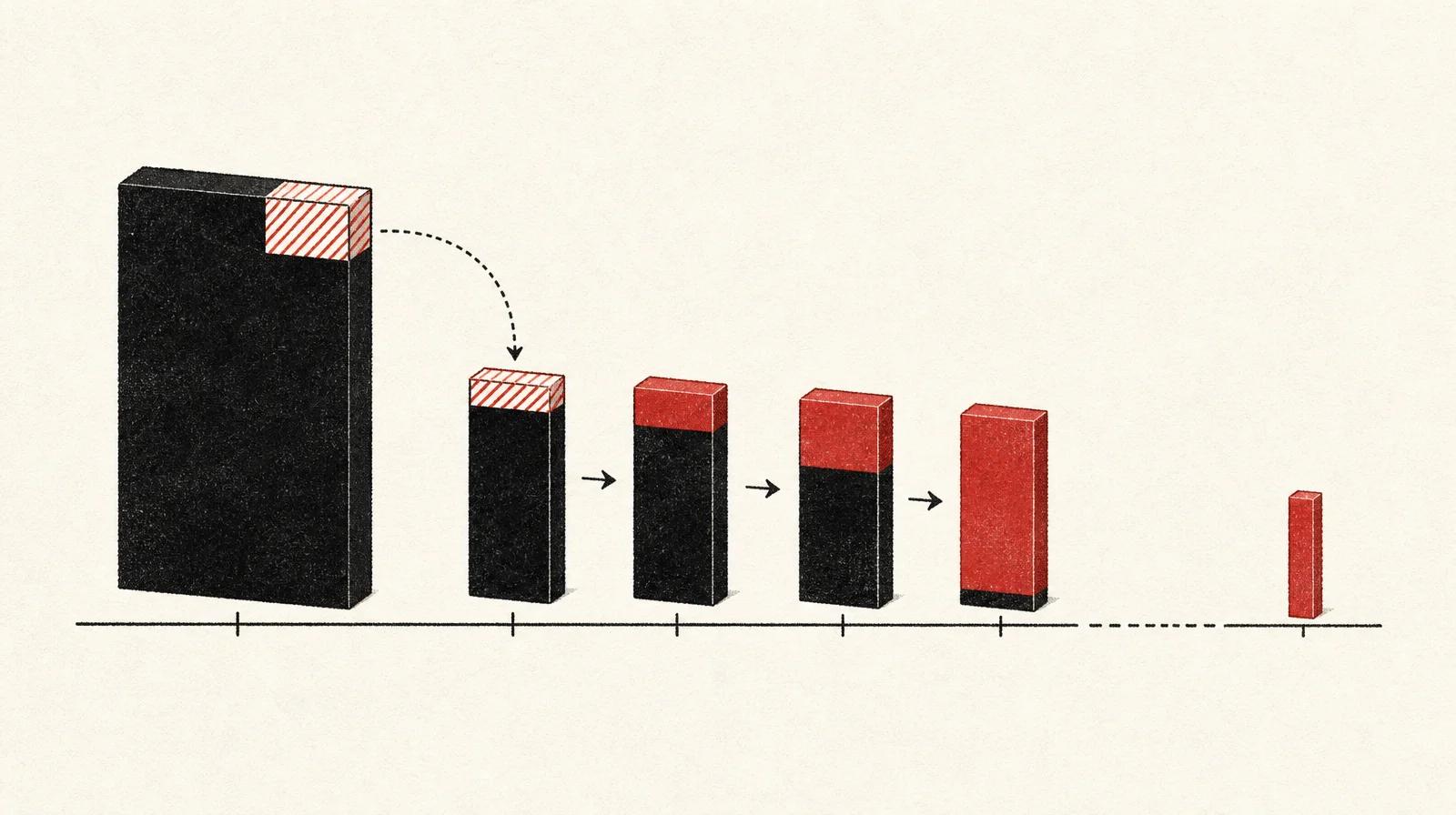
If you judge contribution by the week the order was placed, book the refund against that same week before you read the margin. Start with a reserve for the refunds you expect, taken from your own closed cohorts for that channel. Each later week, replace the reserved amount with refunds you can match to those orders, and re-estimate whatever is still unmatched. When the return window you use for the report closes, release the leftover reserve and keep the matched figure.
Label the sheet as a management estimate. The shape comes from the refund liability in the 2024 issued text of IFRS 15. Paragraph 55 says an entity shall recognise a refund liability if it receives consideration and expects to refund some or all of that consideration, and shall update that liability at the end of each reporting period for changes in circumstances. IFRS 15 is a financial-reporting standard for entities that use IFRS. Do not file this sheet under IFRS or US GAAP. Statutory accounts are a different job, under the framework you actually report on.
Contribution, on this sheet, means tax-exclusive product revenue minus the variable costs the sale triggers: product cost, payment fees, outbound shipping, return logistics, and ad spend you can tie to the orders. Fixed costs stay out. That scope is a choice for the report, so write it in the header. Leave out tax the customer paid. This sheet is not a VAT return, and it does not settle the UK VAT treatment of a refund.
Why an order-week export overstates cohort contribution
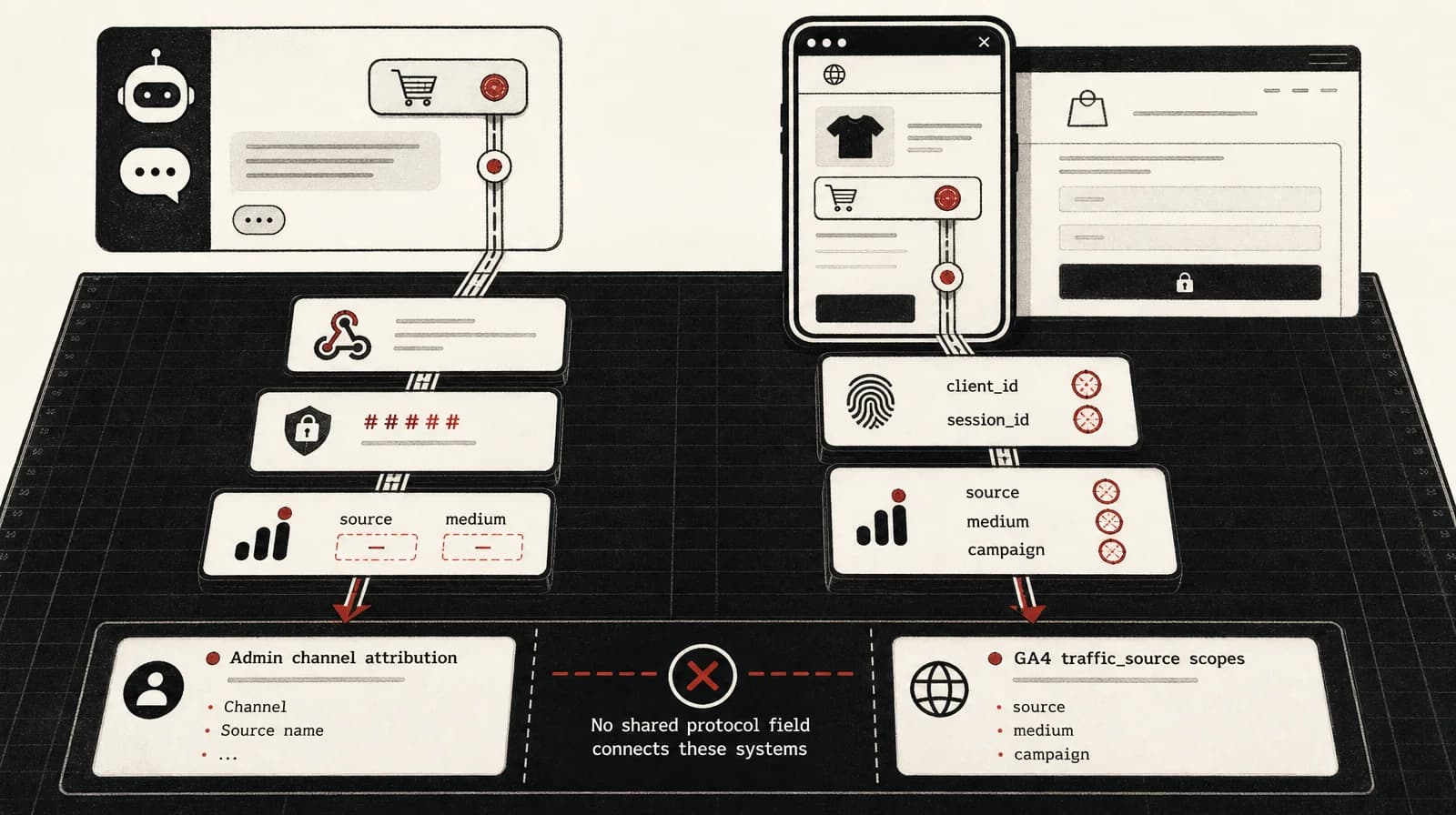
Shopify's sales reports help page puts the sale and the return on different dates. It says total sales "will be a positive number for a sale on the date that an order was placed, and a negative number for a return on the date that an order was returned." An export for last week therefore holds last week's orders in full, and only the returns dated last week. If you assume refunds lag the order week, those dated returns mostly belong to older orders. Read as the contribution of last week's orders, that export overstates the cohort when those dated returns fall short of the refunds the cohort will still produce. Rising order volume is one example.
Which date that negative uses is not settled. The Shopify page dates reversals to the day they were processed. Loop, a returns-software vendor, says that under Shopify's newer returns process "Returns are now recorded when the return is submitted" and that "Historically, reporting was based on the processed date." Loop says that from 28 February 2024 Shopify started moving merchants not on Shopify Plus to that process, and that Shopify Plus merchants were being migrated on a rolling basis. Its "Returns Processed" filter belongs to Loop's own reports, which Loop says show what has actually been processed, so do not use it as a control on Shopify's sales report. Report Pundit, a reporting-app vendor, says self-serve returns can reduce sales "the moment a return is initiated, before any money has actually left your account." Those vendor descriptions conflict with a plain reading of the help page. Check the date type on your own report before you build a lag from a sales-report negative, and tie that negative to a refund transaction.
The same help page said existing return metrics and new reversal metrics would both display until 1 May 2026. That date has passed, so confirm the live column names before a formula depends on a header. The page described the reversal fields as covering the same adjustments as before, including refunds, returns, order edits and cancellations. Reversed quantity, as described there, includes refunds, order edits, exchanges and returns. A reserve built on reversals will hold cancellations and edits as well as goods coming back, unless you filter them out. Write down which flows the reserve covers.
Cash does not share that clock. The Shopify page points to payments finance reports if you want payments and refunds as cash transactions. Report Pundit's returns and store-credit guide says Shopify Payments groups charges, refunds and fees into payouts based on payout timing, and that "the original transaction fee is generally not refunded" when a refund is issued. Write that fee treatment on the sheet as your assumption for the channel, because the guide is not a Shopify Payments rule you can import. Payout week is a separate date, so keep it out of the order-week block.
Shopify Community threads show where screens disagree. They do not document current product behaviour. One thread says the Orders page filter follows the order date, so refunds processed outside that window do not appear. An old thread reported that, in that user's connector, the created_at property on order_refunds matched the refund date. A further thread reports that, without adjustments, an exchange replacement is attributed to the original order date, and that the Sales Agreement endpoint may be needed to date exchanges.
Three readings that do not fix an open week
Waiting until every cohort is closed does avoid the overstatement. It also means the weeks you are spending against have no margin figure. Booking the refund on the week the cash leaves is the right view for the bank, and the wrong view for the campaign that bought the order. Taking the order-week sales export as the cohort, with no reserve, flatters a decision to scale only when the returns dated that week fall short of the refunds those orders will still produce.
None of those is a contribution figure for an open week. You want two columns, filled on purpose, and a reserve on the order-date column until the refunds catch up.
Order date for the cohort, refund date for cash
SignalOps, a reporting vendor, recommends refund date for cash, finance periods and support workload, and original order date for product quality, acquisition quality, cohort behaviour and campaign performance. If a refund-date spike lines up, on the order-date view, with one earlier campaign, launch or batch, inspect that cohort before you change this week's ads. The date split is practitioner opinion. Use it as the column rule, and say so in the header.
Order date is what you use to decide whether last week's acquisition still looks worth the spend once expected refunds are on the week. Refund date is when cash and payouts move. A refund-week total can sit beside the order week without being added into it. Mixing them is how a quiet refund week makes an open order week look cleaner than it is.
Reserve rules, borrowed from the refund liability
Paragraph B21 of IFRS 15 recognises revenue for products not expected to be returned, with a refund liability and an asset, and a matching adjustment to cost of sales. Example 22 in the 2026 issued IFRS 15 illustrative examples records revenue of CU9,700 (CU100 × 97 products not expected to be returned), a refund liability of CU300 and an asset of CU180. Those currency units belong to the example. Do not paste them into a store or treat them as a measured return rate.
BDO UK's 2017 note describes the later update in plain terms: in subsequent periods the seller updates expected returns, adjusting the refund liability and the associated inventory asset. The note treats that reserve as a reduction of revenue, not as a cost of sales. Its comparison with earlier practice is historical.
A management report can reduce revenue or park a provision in costs. This sheet reduces revenue so the percentage uses the same net revenue from one cohort to the next. That presentation is a comparison choice. The contribution dollars can match either way while the percentage changes, and the hypothetical below shows the gap.
The weekly cadence is a management rule as well. IFRS 15 updates the liability at the end of each reporting period. This sheet uses a week so a media decision is not waiting on the entity's reporting-period close. The standard does not require the sheet to close every week.
The reserve rules for this sheet are:
- Take expected refunds from your own closed cohorts, split by channel where the rates differ. There is no rate here to borrow.
- Reduce order-week net revenue by the expected refund of product consideration. Replace that estimate with matched refunds as they land, and re-estimate only the unmatched remainder.
- Hold a recovered-goods offset against product cost only for units you expect back in saleable condition. Write off the rest.
- Leave payment fees in cost unless you have confirmed, for that channel, that the fee comes back.
- Keep outbound shipping you have already paid. Add the return shipping and inspection you expect to pay. Do not reverse attributed ad spend. It was spent to get the order.
- Keep order edits and cancellations out of a product-return reserve unless the sheet says they are in scope. A return row is not automatically a cash refund. Report Pundit treats returns and refunds as different events. If there is no cash refund, do not force the order into the refund-date cash column.
- Keep tax the customer paid off the revenue line.
A hypothetical week, raw to settled
Every figure in this section is invented, in dollars, so you can check the arithmetic. Do not benchmark a store against them, and do not read them as Example 22 with the labels changed.
One hundred orders in the week. Tax-exclusive product revenue is $100 each, so $10,000. Product cost is $40 each, so $4,000. The payment fee is $2.50 each, so $250, and the assumption is that the fee does not come back. Outbound shipping is $5 each, so $500, already paid. Attributed ad spend is $1,500. Return logistics are $6 for each refunded order, and nowhere else. Half of refunded units come back saleable, at the full $40. The other half is a write-off. Ads, fees and outbound shipping do not change when the refund count changes, because those amounts were already spent on all 100 orders.
The opening reserve uses this invented store's closed history: 10 refunds expected. Recovery is 5 times $40, so $200. Return logistics are $60. Net revenue is $9,000.
A later restatement, still inside the window, has matched 8 refunds, and the same store's lag says 6 more are likely. Expected refunds are restated to 14. That is 8 matched plus 6 still estimated. It is not the original 10 plus another 6. Recovery is $280. Logistics are $84. Net revenue is $8,600.
At the close, matched refunds are 12. Recovery is $240. Logistics are $72. Net revenue is $8,800. The unused reserve is released. The equal miss either side of 12 is an artefact of these round assumptions. A live file will not miss by the same dollars in both directions.
| Stage | Net revenue | Contribution | Ratio | | --- | --- | --- | --- | | Cohort orders, no reserve | $10,000 | $3,750 | 37.5% | | Reserved at order | $9,000 | $2,890 | 32.1% | | Reserve raised | $8,600 | $2,546 | 29.6% | | Settled | $8,800 | $2,718 | 30.9% |
Ratios are rounded to one decimal place.
Raw contribution is the unreserved cohort: $10,000 minus $4,000 minus $250 minus $500 minus $1,500, with no return logistics included. That is $3,750, which is 37.5% of $10,000.
Reserved contribution is $9,000 minus product cost of $3,800 (the $4,000 less $200 recovered) minus $250 minus $500 minus $60 minus $1,500. That is $2,890, which is 32.1% of $9,000.
Raised: $8,600 minus $3,720 minus $250 minus $500 minus $84 minus $1,500 is $2,546, which is 29.6% of $8,600.
Settled: $8,800 minus $3,760 minus $250 minus $500 minus $72 minus $1,500 is $2,718, which is 30.9% of $8,800.
The raw week overstates settled contribution by $1,032. The opening reserve overstates it by $172. The raised reserve understates it by $172. The $1,032 is the $1,200 refund, plus $72 of return logistics, less $240 of product cost recovered. Fees and outbound shipping are in both the raw figure and the settled figure, so they do not explain the gap. They still sit in the settled margin. A refund does not hand those costs back under the assumption used here.
If you leave revenue at $10,000 and park the $1,200 of settled refunds in costs instead, contribution is still $2,718, and the ratio is 27.2%. The dollars match, and the percentage does not. Do not compare a revenue-reduction week with a cost-provision week as if the gap were operational.
Restate weekly, then run four file checks
Each week, match new refunds to the order week, swap that amount out of the reserve, and re-estimate only the unmatched remainder from your own closed lag for that channel. When the window you actually use on the sheet has closed, release what is left and lock the settled line. This article does not set a 30-day or a 90-day rule. Do not copy a statutory return deadline onto the sheet unless you have checked that statute against the orders in the file. Keep the same window from week to week, or the cohorts will not compare.
Keep the ratio on the net revenue the reserve has already reduced. Do not set that percentage next to a week that left refunds in costs.
Do not scale a campaign on an open cohort from the raw export. If you spend against an open week, the number in the decision is the reserved contribution, with the last few restatements beside it so the movement is visible. A refund-date spike is a cash and support fact until the order-date column says which cohort it belongs to.
Four checks before that decision:
- Confirm whether the sales-report date is submission or processing, using the date conflict above. Your file settles the date for your store.
- Tie the sales negative to a refund transaction in payments finance reports. Refund date, order name, net refund, shipping refund and tax refund are fields on Report Pundit's own Refund Report. Use a match list with those fields, and keep a shipping refund and a tax refund off the product-revenue line.
- Split reversals. If the column includes order edits, cancellations and exchanges, take those out of a product-return reserve, or label a wider reserve and stop calling it a returns rate.
- Check exchanges on your file before you trust the cohort. Treat the community report above as a check, not as proof that every replacement is dated to the original order.
Write the reserve rate, the unrecovered-fee assumption and the return logistics on the sheet next to the channel name. A fee assumption you have confirmed for Shopify Payments does not apply to a marketplace. If an open cohort is missing those three lines, do not scale spend on it.
Sources
- Sales reports help.shopify.com Shopify sales reports display returns as a negative number on the date the return was processed. Total sales is positive on the date an order was placed and negative on the date an order was returned.
- Shopify Return Reporting Changes (2024) help.loopreturns.com For accurate processed-returns reporting, Loop points merchants to Loop's own reports, not to Shopify's sales report.
- Shopify Refund Report reportpundit.com The page presents the refund date, order name, net refund, shipping refund and tax refund fields as part of Report Pundit's own Refund Report, a vendor app product. They are not fields from Shopify's payments finance reports.
- The complete guide to Shopify refunds, returns and store credit reportpundit.com ReportPundit treats returns and refunds as different events, and says Shopify Payments groups charges, refunds and fees into payouts based on payout timing.
- Why do returns and refunds not match? usesignalops.app SignalOps recommends refund date for cash, finance periods and support workload, and original order date for product quality, acquisition quality, cohort behaviour and campaign performance.
- Returns and refunds discrepancies community.shopify.com A Shopify Community thread, not official documentation, says the Orders page filter is based on the order date, so refunds processed outside that window do not appear.
- Refund Amount by Refund Date Report community.shopify.com In an old Shopify Community thread, one user says that in their connector schema, the created_at date property on the order_refunds table relates to the refund date.
- How to accurately measure sales in Power BI? community.shopify.com A Shopify Community thread reports that, without adjustments, an exchange replacement item is attributed to the original order date, and that these adjustments may need the Sales Agreement endpoint.
- IFRS 15 Revenue from Contracts with Customers (2024 issued) ifrs.org Paragraph 55: recognise a refund liability if consideration is received and some or all of it is expected to be refunded. Update that liability at the end of each reporting period for changes in circumstances.
- IFRS 15 Revenue from Contracts with Customers, Illustrative Examples (2026 issued), Example 22 Right of return ifrs.org In IFRS 15 Example 22 (Right of return), the entity recognises revenue of CU9,700 for 97 products not expected to be returned and a refund liability of CU300 for 3 products expected to be returned, and begins an asset line of CU180.
- Sale with a right of return bdo.co.uk BDO UK, published 2017: in subsequent periods the seller updates expected returns, adjusting the refund liability and the associated inventory asset.